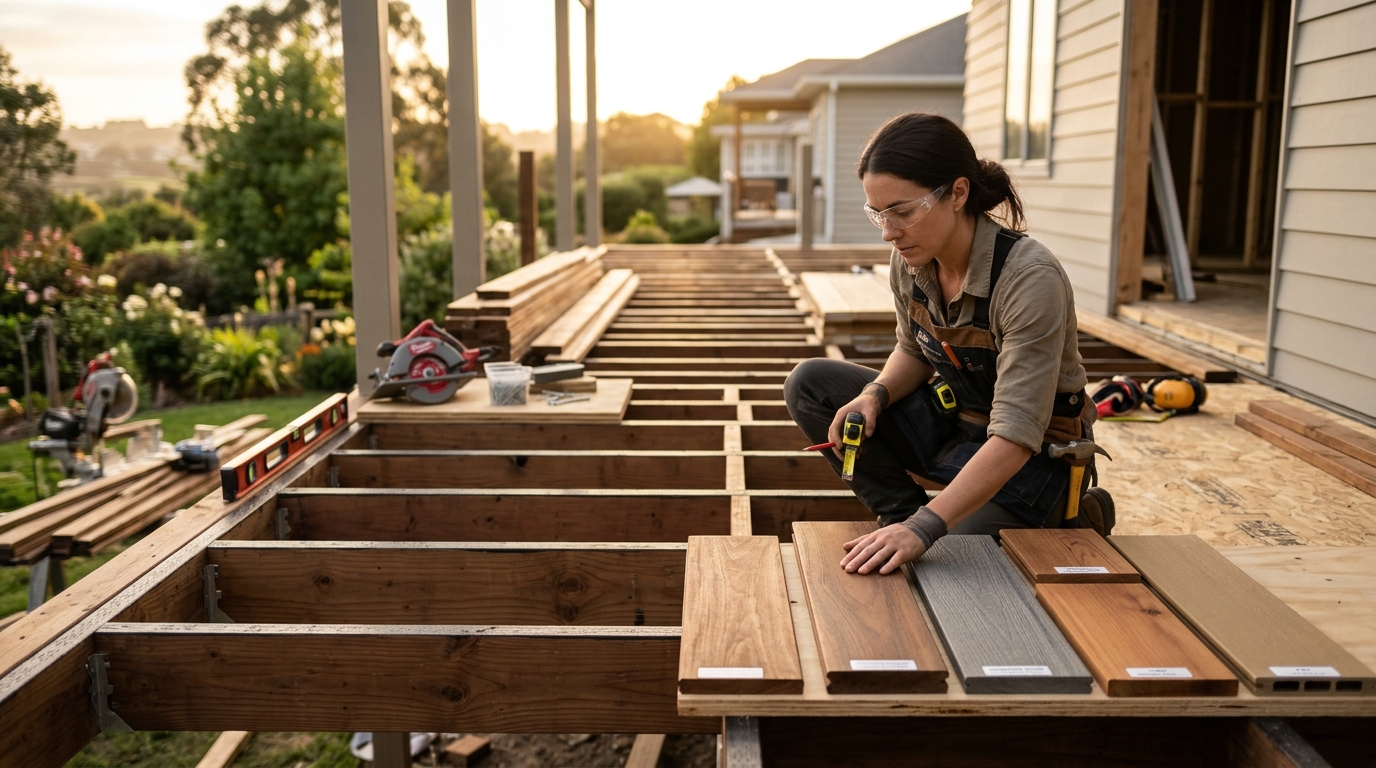
The decking choice that affects your budget for years
Picking decking is not just about color samples at the store. The material you choose changes your upfront cost, your maintenance schedule, how hot the deck gets in summer, how long boards stay straight, and whether you will be replacing pieces five years from now or twenty.
For most homeowners, the real choice comes down to three categories: pressure-treated wood, composite decking, and PVC decking. Cedar and redwood still exist, but in many markets they are harder to source consistently and often land in an awkward middle zone where they cost much more than pressure-treated lumber without matching the long-term low maintenance of composite or PVC.
If you are planning a new deck or resurfacing an old frame, start with the total project cost, not just the board price. Railings, hidden fasteners, framing repairs, stairs, fascia, and labor can easily double or triple the visible decking number. Before you compare materials, it helps to map quantities correctly. If you have plans or even a simple sketch, a room-by-room takeoff from the AI Pricing Tool can help you estimate boards, waste, and related materials before you start calling suppliers.
The goal is simple: buy the material that fits how you actually live, not the one that only looks cheapest on day one.
Pressure-treated wood: lowest upfront cost, highest maintenance
Pressure-treated wood is usually the cheapest way to build a deck. In many US markets in 2026, basic pressure-treated deck boards often cost a fraction of premium composite or PVC boards. That lower board price is why so many entry-level decks still get built with treated lumber.
But low purchase price comes with tradeoffs. Wood can crack, cup, splinter, twist, and fade. It also needs regular cleaning and sealing or staining if you want it to keep looking decent. If you skip maintenance, the deck usually tells on you fast.
- Best for: tight budgets, rental properties, utility decks, and homeowners comfortable with upkeep
- Main strengths: affordable, widely available, structurally familiar to most contractors, easy to repair board-by-board
- Main drawbacks: ongoing maintenance, more movement over time, more bare-foot splinters, shorter aesthetic lifespan
A practical way to judge wood is to ask yourself whether you will realistically clean, seal, or stain it every few years. Many homeowners say yes and then never do. If that sounds like you, wood may not be your cheapest option over time.
One more point: if you are resurfacing an old deck frame with new wood decking, inspect the joists carefully first. Cheap deck boards installed over tired framing rarely save money for long.
Composite decking: the middle ground most homeowners choose
Composite decking became popular for a reason. It usually gives homeowners the best balance between appearance, maintenance, and long-term value. Most composite boards are made from a blend of wood fibers and plastic, often with a protective cap that resists staining and fading better than early generations did.
Composite normally costs more upfront than pressure-treated lumber, but less than premium PVC in many product lines. For many families, that middle ground makes sense because they want a deck that looks finished year after year without annual staining weekends.
- Best for: primary residences, entertaining spaces, families who want lower upkeep
- Main strengths: low maintenance, broad color choices, fewer splinters, cleaner finished appearance
- Main drawbacks: higher upfront cost, can get hot in direct sun, quality varies a lot by brand and line
Not all composite is equal. Entry-level boards may have shorter warranties, less realistic grain, and more color fade. Premium lines can look excellent but may cost far more than shoppers expect. Ask to see full-length boards, not just small samples. A two-inch sample never shows board flex, color variation, or surface texture honestly.
If you are comparing bids, make sure each contractor is pricing the exact same product line. "Composite" is too vague to compare fairly. The difference between budget composite and premium capped composite can be significant.
PVC decking: premium price, lowest maintenance
PVC decking is the most moisture-resistant option in this group because it contains no wood fiber. That makes it especially attractive for high-moisture environments, splash zones around pools, and homeowners who want the least maintenance possible.
The biggest downside is usually price. PVC often sits at the high end of the decking market, and once you add matching trim, hidden fasteners, and upgraded railings, the final budget can climb quickly. Some homeowners also prefer the feel and look of higher-end composite over certain PVC boards, so this is not automatically the "best" choice just because it costs more.
- Best for: wet climates, pool decks, coastal areas, homeowners prioritizing minimal upkeep
- Main strengths: excellent moisture resistance, very low maintenance, lighter weight on some lines
- Main drawbacks: higher cost, can feel less natural than wood, heat performance varies by color and brand
If your deck gets hard sun, ask specifically about heat buildup. Darker boards of any material can get hot, and some PVC lines are better than others. Also check span ratings and installation rules. Premium decking products often have stricter requirements than basic lumber, and ignoring them can void warranties.
PVC makes the most sense when maintenance avoidance is a top priority and the budget supports it from the start.
What the real cost comparison should include
Homeowners often compare decking materials by price per board and stop there. That is where mistakes happen. Real deck cost includes far more than the walking surface.
Build your comparison around these buckets:
- Decking boards: the visible surface material
- Framing repairs or upgrades: especially important on resurfacing jobs
- Fasteners: screws or hidden clip systems
- Railings and stairs: often one of the largest line items
- Fascia and trim: creates the finished perimeter look
- Labor: some systems install slower than others
- Maintenance: sealing, staining, cleaning products, future board replacement
A simple example: a wood deck may win on day-one material price, but if you pay for cleaning and staining every few years, replace cracked boards, and live with cosmetic aging, the long-term gap narrows. Composite or PVC may cost more upfront but reduce recurring work and surprise repairs.
If you are trying to budget accurately before hiring, run a material takeoff first, then get bids based on the same scope. The AI Pricing Tool is useful here because it can turn a plan or blueprint PDF into quantities with waste factors, which gives you a cleaner apples-to-apples baseline when comparing contractor quotes.
How to choose the right decking for your house, climate and habits
The best decking material depends less on trends and more on how the deck will be used. A back-entry platform at a rental house does not need the same material strategy as a large backyard entertaining deck with stairs, built-in seating, and full sun exposure.
Use this quick decision filter:
- Choose pressure-treated wood if upfront cost is your main concern and you will keep up with maintenance.
- Choose composite if you want the best balance of looks, durability, and lower upkeep for a main living space.
- Choose PVC if moisture resistance and minimal maintenance matter more than initial price.
Then pressure-test your decision with real-life questions:
- Will this deck get full afternoon sun?
- Do kids or pets use it barefoot?
- Are you okay with annual or biannual upkeep?
- Is this your long-term home or a shorter-term ownership plan?
- Does the deck sit near a pool, sprinkler overspray, or heavy rain exposure?
If you still feel stuck, get two or three quotes from local pros and ask each one to price the same layout in two material options. You can post a project free and compare vetted local contractor quotes based on the exact deck scope you want, which is often the fastest way to see whether upgrading materials changes the overall project cost as much as you think.
Smart buying tips before you order anything
Once you narrow the material category, the final money-saving moves happen before you place the order. First, confirm board lengths that reduce waste on your actual layout. A cheaper board can become expensive if your plan creates lots of cutoffs.
Second, ask whether your contractor plans picture framing, breaker boards, or diagonal patterns. Those design choices look great, but they affect material quantities and labor. Third, verify what is included in the quote. Hidden fasteners, fascia, stair treads, post sleeves, and demo debris hauling are commonly misunderstood line items.
Also check local availability. Special-order decking can delay a project, and color matching later may be harder if a line changes. If you are open to contractor-overstock items for accessories or non-visible materials, it can be worth checking the Tools & Materials Marketplace for leftover jobsite materials sold by other pros. Just make sure lot consistency, condition, and quantities work for your project.
Finally, do not choose a board from a phone screen alone. See a full sample in daylight, touch the texture, and compare heat, color, and slip feel. Good decking is expensive enough that you should be picky.
Ready to price your deck with real quantities before you call around? Try the AI Pricing Tool.