Start with the real number, not the wish number
Most remodel budgets go off track before the first contractor even shows up. The problem is not always overspending. It is starting with a number based on hope instead of scope. Homeowners often say, “We want to redo the kitchen for around $25,000,” when they have not priced cabinets, layout changes, electrical updates, flooring, permits, or finish selections. That number may be possible for a light cosmetic update, but not for a full gut remodel in many markets.
A better approach is to build your budget in layers. First, separate must-haves from nice-to-haves. Second, decide whether you are doing a cosmetic refresh, partial remodel, or full reconstruction. Third, account for labor, materials, design, permits, and a contingency fund before you think about upgrades.
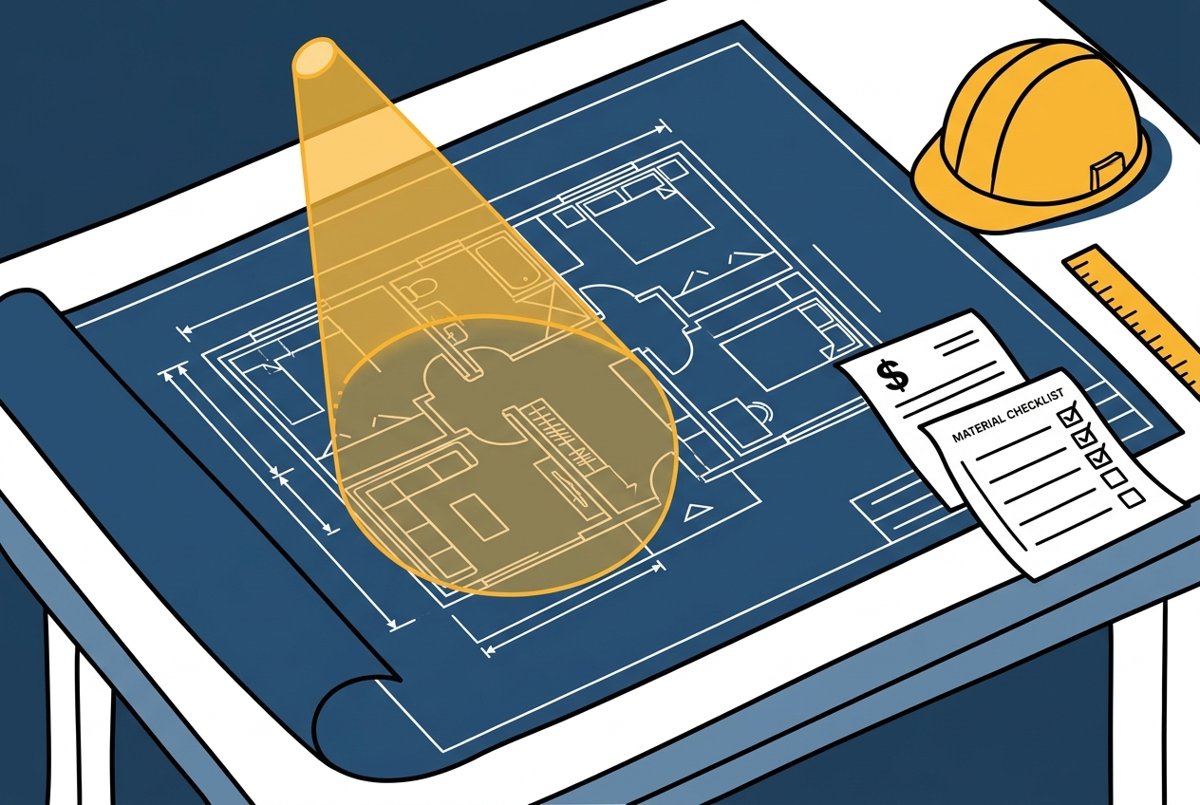
If you have plans, sketches, or even a blueprint PDF, use an estimating tool before requesting bids. ConstructHelp’s AI Pricing Tool can generate a 3-tier estimate and room-by-room material takeoff, which is useful for checking whether your target budget is even in the right range. That does not replace contractor bids, but it gives you a practical starting point and helps you avoid planning a $60,000 project around a $30,000 budget.
Break the project into budget buckets
One lump-sum number is hard to control. Budget buckets make tradeoffs easier. For most remodels, create separate line items for demolition, framing, plumbing, electrical, HVAC, insulation, drywall, flooring, cabinets, countertops, fixtures, paint, permits, cleanup, and labor. If you are moving walls or adding square footage, include engineering or architectural costs too.
Here is a simple homeowner framework:
- Construction labor: the crew, supervision, and project management
- Materials: building products, finishes, and delivery charges
- Soft costs: permits, design, plans, engineering, dumpsters
- Contingency: money reserved for surprises
This matters because not all overruns come from the same place. You may save on tile and lose that savings when an electrician finds outdated wiring behind the walls. If your budget is split into buckets, you can see where the pressure is building and make decisions early.
When material pricing is fuzzy, a takeoff helps. A room-by-room estimate from the AI Pricing Tool can help you spot obvious misses like forgotten underlayment, waste factors, or too-low quantities. Even if your contractor supplies the final numbers, you will be in a better position to understand what is driving cost.
Set a contingency that matches the risk
Every remodel needs a contingency fund. The only question is how much. For cosmetic work in a newer home, 10% may be enough. For older homes, structural changes, wall removals, bathroom relocations, or anything involving hidden conditions, 15% to 20% is more realistic. If your house is older and the work touches plumbing, electrical, or framing, assume there will be at least one surprise.
Common budget shocks include:
- Water damage behind shower walls or under flooring
- Outdated electrical panels or unsafe wiring
- Subfloor rot, uneven framing, or termite damage
- Permit-required upgrades triggered by the scope of work
- Long lead items that force material substitutions
The contingency is not extra spending money for premium finishes. It is a safety buffer. Keep it separate from the main job budget so you do not accidentally spend it during the design phase. If the project finishes without using all of it, great. That is a win, not a sign you budgeted wrong.
A good contractor will warn you where the risk points are before demolition starts. If they say, “We won’t know what’s behind this wall until we open it,” treat that as a budget signal, not a sales tactic. Remodels are full of unknowns, and the homeowners who handle them best are the ones who plan for them up front.
Compare quotes by scope, not just by price
A low quote can be a bargain, or it can be a missing-scope problem waiting to become a change order. When you review estimates, compare what is actually included: demolition, debris haul-off, protection of finished areas, permits, finish materials, fixture allowances, painting, punch-list work, and cleanup. Two bids can be $15,000 apart because one includes details the other left out.
Ask each contractor to clarify three things in writing:
- What is included?
- What is excluded?
- What allowances are being used?
Allowances deserve special attention. A quote may include “tile allowance: $4 per square foot” when the tile you like costs $9. The bid looks competitive, but your actual cost will be much higher once selections are finalized.
If you want multiple contractors pricing the same scope, give them the same project description, plans, and finish expectations. A clean way to do that is to post a project free and collect quotes from vetted local contractors using one consistent job brief. That helps you compare apples to apples instead of trying to reconcile three totally different interpretations of the same remodel.
And do not forget timeline. A higher bid from a contractor with stronger scheduling, supervision, and communication may save money if it reduces delays, rework, or weeks of living without a kitchen.
Control upgrades before they control your budget
Homeowners rarely blow the budget in one dramatic moment. It usually happens through a chain of “while we’re at it” decisions. Better flooring, upgraded faucets, taller cabinets, moving one more light, adding a niche, extending tile to the ceiling, changing doors, replacing trim in the next room. Each decision seems manageable by itself. Together, they can add thousands.
The fix is simple: make selections early and price upgrades before approving them. Try using three categories:
- Locked: these items are non-negotiable and already in budget
- Flexible: upgrades you want if pricing allows
- Later: items you can postpone without affecting core construction
This keeps your project from drifting. If you decide to splurge on quartz instead of laminate, you may choose to keep the existing pantry layout or wait on new bar stools and backsplash accents. Good budgeting is not about saying no to everything. It is about choosing where the money matters most.
Also watch lead times. If a backordered vanity or appliance delays the schedule, your labor timeline can shift too. Finalizing selections early helps both your budget and your calendar. The earlier you lock choices, the fewer rushed substitutions you will make later under pressure.
Match your payment schedule to completed work
Budget control is not just about the total price. It is also about when money leaves your account. A safe payment schedule should follow actual progress, not vague promises. Typical milestones might include deposit, demolition complete, rough-ins complete, drywall complete, cabinet install, substantial completion, and final punch list. The exact structure varies, but each payment should tie to visible work.
Never rely on verbal updates alone. Ask for a written payment schedule in the contract, and keep records of approved changes along the way. If a change affects price or timeline, it should be documented before the extra work starts. That is how you avoid budget creep disguised as confusion.
For larger jobs, payment protection matters. ConstructHelp’s Escrow Payment Protection lets money be held and released milestone by milestone as work is completed. That gives homeowners a cleaner process for staying on budget and reduces the risk of paying too far ahead of progress.
One more practical tip: keep a small closeout reserve until punch-list items are finished. Final paint touchups, hardware adjustments, cracked trim, missing covers, and cleanup details tend to happen at the end. A structured final payment gives everyone a reason to finish strong.
Build a budget that survives the real world
A solid remodel budget is not the cheapest number you can get on paper. It is the number that can survive hidden conditions, realistic material choices, scheduling friction, and a few inevitable surprises. If you define scope clearly, break costs into buckets, set a real contingency, compare quotes carefully, and tie payments to milestones, you will make better decisions at every stage of the project.
Before hiring anyone, make sure you can answer these questions:
- What is the exact scope of work?
- What materials and finish levels are assumed?
- What is my contingency amount?
- What is included in each quote, and what is excluded?
- What change-order process will be used?
- How are payments tied to progress?
The goal is not to predict every cost perfectly. The goal is to remove avoidable surprises and keep the unavoidable ones manageable. Homeowners who budget well are not lucky. They are organized.
If you want a fast starting point before collecting contractor bids, try the AI Pricing Tool.