Stop guessing: use the 3-job rule first
Most contractors lose money on equipment in one of two ways: they buy too early and tie up cash in machines that sit, or they rent too long and quietly overpay job after job. The fix is not complicated. Start with one simple question: how many times will this tool or machine make you money in the next 12 months?
A practical starting point is the 3-job rule. If a piece of equipment will be used on fewer than three solid, scheduled jobs this year, renting is usually safer. If you already have repeat work lined up and the tool will be on site constantly, buying starts to make sense. This is especially true for compact equipment, specialty saws, demo hammers, floor prep tools, laser levels, scaffolding systems, and high-end dust extraction setups.
The mistake is deciding based on the sticker price alone. A $2,500 tool is not really $2,500 once you include blades, batteries, maintenance, transport, downtime, and theft risk. On the rental side, a $185 daily rate is not really $185 if your crew loses half a day picking it up, returning it, or waiting because it was booked out.
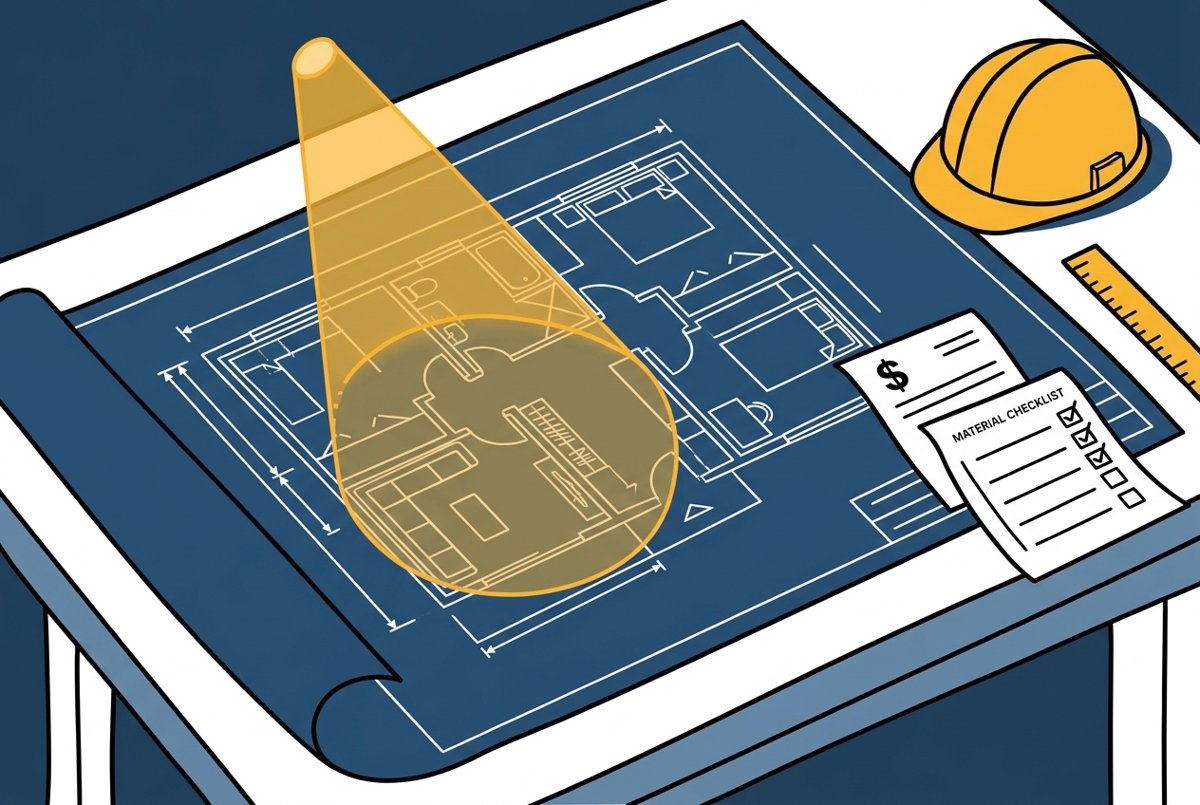
If you need a fast way to run the job numbers, use the AI Pricing Tool to build a room-by-room takeoff and estimate the labor and material side first. Once you know the real scope, your equipment decision gets much easier.
The real math behind renting vs buying
To compare options fairly, calculate cost per job, not just monthly payment or rental rate.
- Buying formula: purchase price + tax + financing cost + maintenance + consumables + storage + expected repairs - resale value, divided by expected jobs
- Rental formula: daily or weekly rate + delivery/pickup + fuel + damage waiver + extra day risk + crew time spent handling logistics
Example: say you need a walk-behind concrete saw. Buying costs $3,200. Over two years, you spend another $600 on maintenance and small repairs, and you expect to resell it for $1,400. Your ownership cost is about $2,400. If you use it on 24 jobs, that is roughly $100 per job before blades and labor.
Now compare renting. If the local rate is $95 per day plus $40 in pickup and return time or delivery cost, your real cost might be $135 to $160 each use. At 24 uses, renting could cost $3,240 to $3,840. In that case, buying is likely the better move.
But flip the usage. If you only need that saw six times, ownership cost is about $400 per job while renting is still around $135 to $160. Renting wins easily.
This is why volume matters more than opinion. The more specialized the equipment, the more carefully you should check actual usage instead of assuming you will "use it all the time."
When renting is the smarter move
Renting is usually the better choice when the equipment is expensive, specialized, bulky, or needed only for a short project phase.
Rent when:
- You need the tool for a one-off task, like core drilling, stump grinding, trench compaction, or floor stripping
- The machine becomes obsolete quickly or requires costly calibration
- Storage is a problem, especially for lifts, compaction gear, and large demo equipment
- Your cash is better used for payroll, materials, or marketing
- You are testing a new service line and do not know demand yet
Renting also helps when a homeowner project has uncertain timing. If permits, inspections, or preceding trades may delay you, owning can leave equipment sitting while payments keep coming. A timed rental shifts some of that risk away from you.
One overlooked advantage is flexibility. On one job you might need a 14-inch saw, on the next a larger unit with water feed, and on another a ride-on option. Renting lets you match the machine to the task instead of forcing every task to fit what you own.
If you are bidding a project and not sure whether a specialized machine belongs in your estimate, posting the full job through Post a Project free can help homeowners collect comparable contractor quotes. That gives everyone a clearer view of whether rental-heavy work is priced realistically in your market.
When buying pays off
Buying makes the most sense when the equipment is used often, directly affects schedule, or helps you deliver cleaner work and higher margins.
Buy when:
- The tool is on nearly every job, like rotary lasers, table saws, miter saws, air compressors, ladders, or standard scaffold components
- Delays from rentals would hurt production or force your crew to stop
- Your team works faster because they know your exact setup
- You can maintain and store it properly
- You expect solid resale demand if your needs change
Ownership also gives you control. Your crew knows where the gear is, how it performs, and what accessories are available. That matters more than many contractors admit. If your tile crew loses two hours because the rental saw fence is bent or the pump is weak, the cheap rental was not cheap.
Buying can also create a competitive edge. For example, owning dust control equipment, specialty layout tools, or a dependable material handling setup can make your jobs cleaner, faster, and easier to schedule. That can be worth more than the accounting line item alone.
Still, buy used carefully. Check hours, wear points, switches, guards, hoses, battery health, and parts availability. For common pro gear, the Tools & Materials Marketplace can be a practical place to compare used inventory and leftover job materials from other pros before paying full retail.
The hidden costs that ruin the decision
Most bad equipment decisions come from ignoring the hidden costs.
Watch these five closely:
- Downtime: If a broken machine stops a three-person crew, the real loss can exceed the repair bill fast.
- Transport: A rented machine that needs a trailer, straps, and a pickup window has labor cost attached to it.
- Attachments and consumables: Buckets, bits, blades, filters, hoses, and batteries can change the math a lot.
- Storage and security: Theft risk is real, especially for generators, compact equipment, and cordless tool kits.
- Financing pressure: Monthly payments feel manageable until work slows and fixed costs pile up.
There is also the estimating problem. Contractors often remember the rental receipt but forget the extra labor hours caused by awkward scheduling, jobsite waiting, or using the wrong-size machine because the right one was unavailable. On the ownership side, they forget annual service, tire replacement, or battery replacement cycles.
A good habit is to add an equipment line to every estimate, even for tools you already own. Equipment is not free just because it is paid off. It still has wear, fuel, maintenance, and replacement cost. If you skip that line, your jobs may look profitable while your tool budget slowly drains in the background.
A simple decision checklist before every purchase
Before you buy or rent, run through this checklist:
- How many jobs will use it in the next 12 months?
- What is the real cost per job if I own it?
- What is the real cost per use if I rent it?
- Will this tool shorten labor time or improve finish quality?
- Do I have secure storage and a maintenance plan?
- Can I resell it easily if demand changes?
- Would used equipment do the job just as well?
For materials-adjacent gear, also ask whether the equipment helps reduce waste. A better saw, mixer, sprayer, or measuring system can lower material loss enough to justify ownership sooner than expected.
If you do buy, track the first 10 uses. Write down revenue tied to the tool, setup time, maintenance, and whether it prevented delays. That log tells you more than memory ever will.
And if you need a fast sanity check on whether the scope justifies owning job-specific equipment, build the estimate first with the AI Pricing Tool. Clear quantities, waste factors, and room-by-room scope make equipment decisions much less emotional.
Buy for frequency, rent for spikes
Here is the short version: buy equipment that supports your core service every week, and rent equipment that covers occasional spikes, unusual scope, or temporary expansion. That approach protects cash while still letting you take profitable jobs.
A remodeler who owns everyday cutting, drilling, layout, cleanup, and material-handling tools is usually in a strong position. The same remodeler probably does not need to own every compactor, lift, core rig, or specialty floor machine unless those jobs are consistently booked. A concrete crew may justify owning saws and compaction equipment, while renting niche specialty gear only when plans demand it.
The goal is not to own the most equipment. The goal is to own the right equipment at the right utilization rate. That is what keeps your bids competitive and your cash flow healthy.
If you are ready to compare used gear or move excess tools that no longer earn their keep, check the Tools & Materials Marketplace.